Let us help you grow the business you love.
Your world is about to get a whole lot simpler.


How connected data, intelligent workflows and human judgement are transforming property professionals from administrators into asset managers.
Artificial intelligence has become one of the biggest conversations in property management. Every week seems to bring another breakthrough, another platform and another promise about how AI will transform the industry.
The buzz is justified. AI has the potential to remove much of the routine administration that has long weighed down property professionals, freeing them to focus on the work that truly creates value.
But amid all the excitement, one important question is often overlooked.
Is your business actually ready for AI?
You cannot place intelligent automation on top of fragmented information, disconnected teams and inconsistent processes and expect intelligent outcomes. If the underlying business isn't connected, AI simply inherits the same inefficiencies, only faster.
That is why the businesses that will benefit most from AI won't necessarily be the first to adopt it. They'll be the ones that have spent time building the right foundations.
And those foundations are surprisingly familiar.
They include centralised and reliable data. Clearly defined and repeatable workflows. Connected teams working from a single platform. Clear accountability, consistent processes and information that is accurate enough to be trusted.
Without them, AI has very little to work with.
This distinction is already becoming clear across the global real estate industry. JLL's 2025 Global Real Estate Technology Survey found that while 92% of corporate real estate teams had either begun piloting AI or planned to do so during the year, only 5% reported achieving most of their AI programme goals. The deciding factor wasn't enthusiasm for AI – it was technology maturity, infrastructure and systematic implementation.
In other words, AI adoption and AI readiness are two very different things.
For many years, technology in our industry has focused primarily on digitising administration. We replaced filing cabinets with cloud storage, paper forms with online portals and manual calculations with automated workflows. Those were important steps forward, but AI offers an opportunity to think differently.
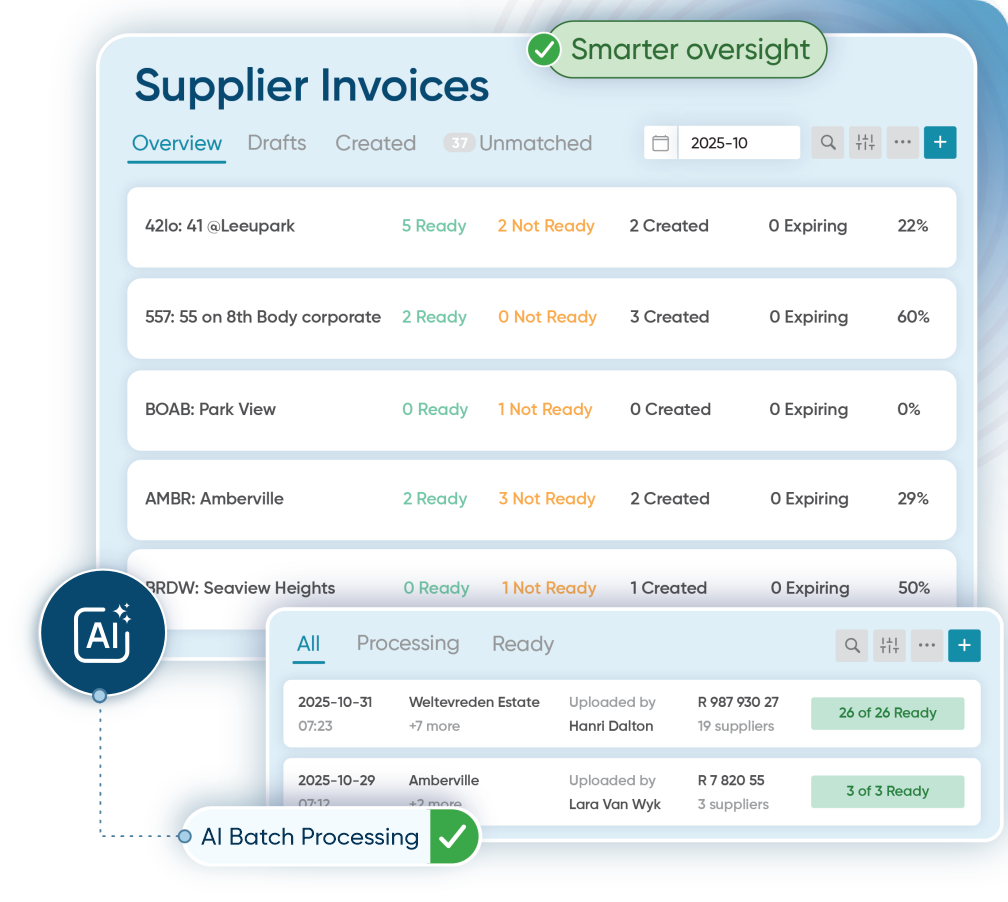
The real opportunity isn't simply to complete today's administrative tasks more quickly. It's to redesign how work itself moves through a business.
Routine activities like capturing data, chasing updates, preparing reports, routing approvals and coordinating recurring workflows are all highly structured processes. Given the right operating environment, these are exactly the kinds of activities AI can increasingly help to manage.
And that's an important distinction.
The greatest value of AI isn't that it works instead of people.It's that it removes the work around the decision so people can focus on the decision itself.
Instead of spending valuable hours searching for information, coordinating between departments or following up on outstanding actions, property professionals gain more time to interpret information, identify emerging risks, advise clients and improve portfolio performance.
As administration becomes lighter, professional judgement becomes more valuable.
Building that kind of future doesn't begin with AI. It begins by building better businesses.
That philosophy has always been central to WeconnectU's approach.
Long before AI dominated the agenda, our focus has been on helping property management businesses become more compliant, more manageable, more scalable and, ultimately, more profitable. While these have always been the four defining challenges of modern property management, they also happen to be the same characteristics that make a business ready for intelligent automation.
Consider compliance.
AI has the potential to identify missing information, surface emerging risks and prompt required actions before small issues become significant problems. But those capabilities rely on structured information, connected workflows and clear accountability. Human oversight remains essential wherever legal, financial or reputational judgement is required, yet technology can remove much of the administrative burden surrounding those decisions.
The same principle applies to manageability.
One of the biggest hidden costs in property management isn't the work itself. It's the endless coordination that surrounds it, searching for information, following up with colleagues, checking progress and reconnecting conversations spread across emails, messages and disconnected systems.
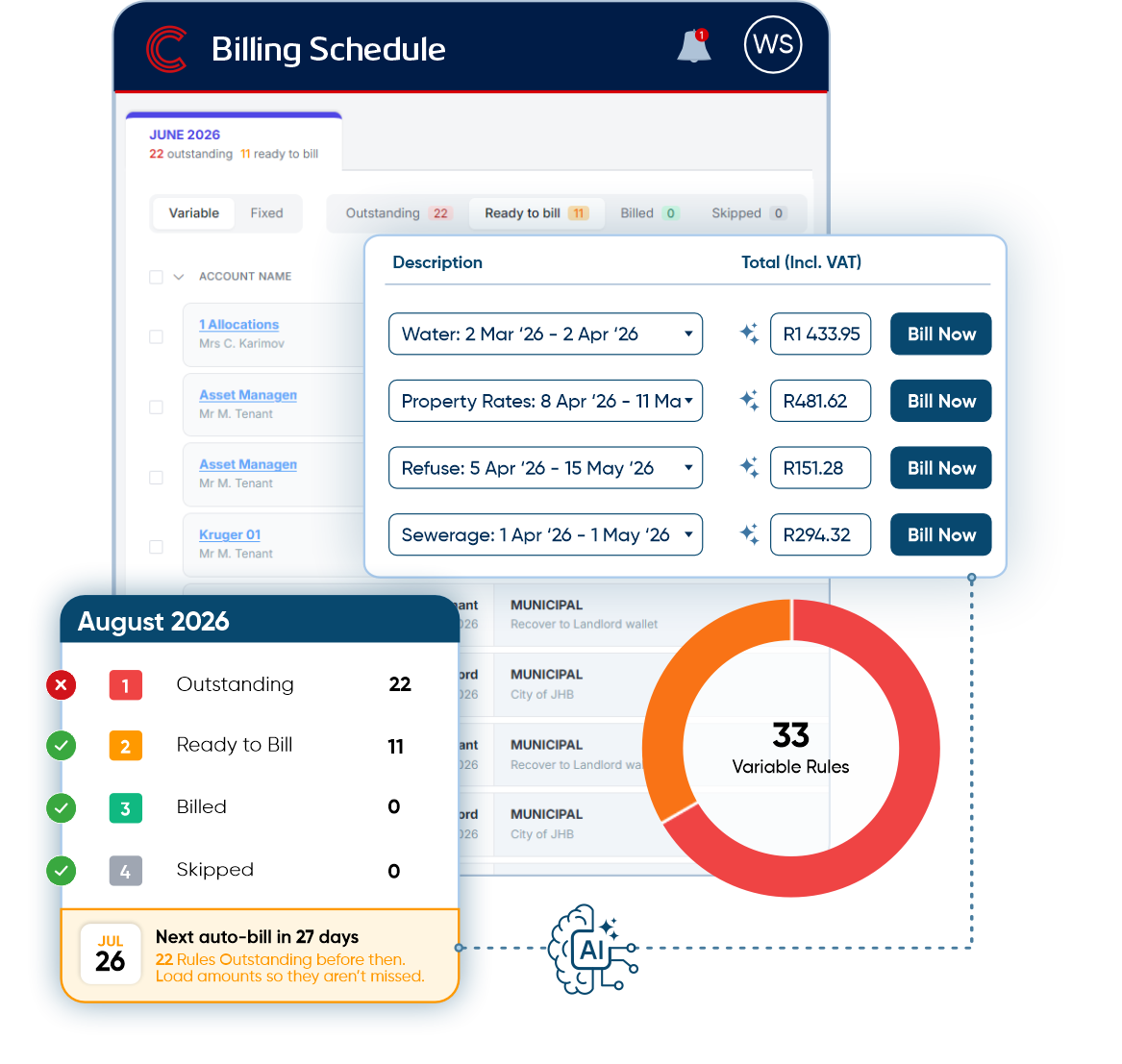
When information, responsibilities and supporting context live together in one connected environment, much of that unnecessary coordination disappears. AI can then build on those foundations instead of spending its time trying to reconstruct fragmented information.
The benefits extend naturally into scalability.
For decades, growth has usually meant hiring more people to manage more administration. But businesses built on standardised workflows and connected data don't find complexity increasing at the same rate as their portfolios. As routine coordination becomes increasingly automated, teams gain the capacity to manage more properties, more communities and more recurring processes without sacrificing consistency or service quality.
Profitability then becomes the outcome rather than the objective.
Businesses that reduce duplicated effort, improve visibility and create greater operational consistency naturally free their people to spend more time delivering higher-value advisory services. Better compliance, stronger manageability and greater scalability combine to create a more profitable operation, not because AI magically creates profit, but because it enables professionals to spend their expertise where it matters most.
Perhaps that's the biggest misconception surrounding AI. Many people still view it as a technology that will eventually replace professionals.
We believe the opposite.
As technology takes on more repeatable work, the distinctly human elements of property management become even more valuable.
Relationships. Judgement. Experience. Context. Trust.
These are the things technology cannot replace and the very areas where exceptional property professionals have always created the greatest value.
Global research is pointing towards the same conclusion. McKinsey's work on agentic AI in real estate argues that meaningful AI value won't come from adding isolated AI tools alongside existing processes. It will come from redesigning complete workflows, connecting systems and ensuring that people remain responsible for the exceptions, trade-offs and decisions involving financial, regulatory or reputational risk.
That is exactly where the future role of the property professional lies.
Not as an administrator moving information between departments, but as an asset manager interpreting information, managing risk, guiding stakeholders and protecting the long-term performance of their clients' most valuable assets.